
Riptide Bioscience, Inc.
A therapeutic platform built on synthetic host defense peptides — engineered with substantially enhanced potency and selectivity across infectious disease, fibrosis, and oncology.
Company Overview
Riptide Bioscience develops therapeutics based on one of nature’s oldest defense systems: host defense peptides. These small proteins protect the body against microbial infection while regulating key components of the innate immune response. Riptide engineers synthetic peptides with greatly enhanced potency and selectivity, building a therapeutic platform spanning infectious disease, fibrosis, oncology, and other immune-mediated disorders.
01 — Our Science
Riptide’s therapeutic platform is based on engineered peptides that enhance the biological activity of naturally occurring Host Defense Peptides (HDPs). HDPs are small proteins that are a key part of the innate immune system, where they provide a first line of defense against microbial invasion, particularly in wounds and damaged tissue that are vulnerable to bacterial colonization.
In parallel with these antimicrobial functions, inflammatory signaling recruits immune cells to sites of tissue injury. As healing progresses, specific HDPs help resolve inflammation and restore normal tissue homeostasis.
Riptide has identified the structural features responsible for the biological activity of certain naturally occurring HDPs and has designed proprietary peptide therapeutics with substantially enhanced potency and selectivity. These engineered peptides exhibit promising potential to combat infection in acute disease and arrest the progression of chronic disease.
Riptide’s immune-modulation program targets the CD206 receptor to selectively address macrophage populations that actively promote tumor growth and fibrotic lesions. Riptide scientists were the first to show that binding a specific CD206 epitope with a rationally designed peptide can reprogram these pathogenic macrophages toward a homeostatic phenotype, arresting the development of organ cancer or fibrosis.
Over the past seven years, Riptide Bioscience has generated a substantial body of supporting preclinical data through collaborations with leading academic investigators, competitively awarded research grants, and independent studies supported by organizations including the U.S. Department of Defense, the National Cancer Institute, and the National Eye Institute. The company is actively pursuing partnerships with pharmaceutical companies to advance the clinical development and commercialization of its proprietary peptide therapeutics.
7 Years
of supporting preclinical
data
4
Federal agencies funding
research programs
1st
To reprogram pathogenic macrophages via the CD206 receptor
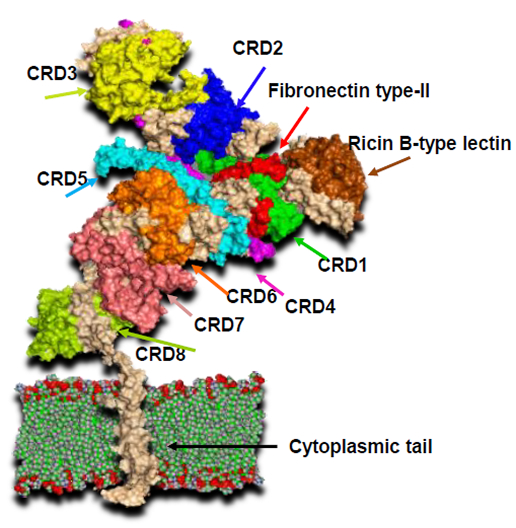
CD206 / MRC1 molecule — showing carbohydrate recognition domains.
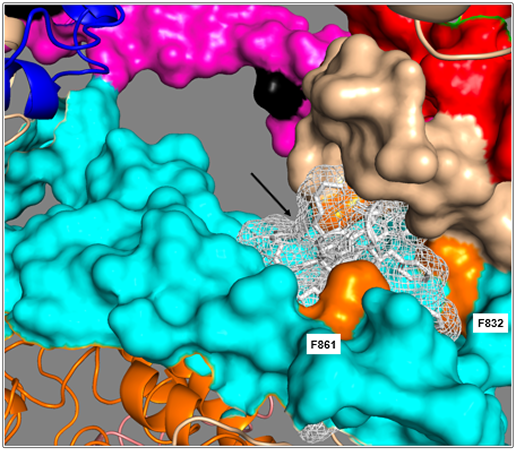
Binding region of RP peptides — rationally designed to engage a specific CD206 epitope.
02 — Our Programs
A single therapeutic platform advancing engineered host defense peptides across three distinct disease areas — each addressing a major unmet need with a differentiated mechanism.
RP557
Topical antimicrobial peptide
Membrane disruption: Broad-spectrum
RP30
Fibrosis-associated macrophage modulator
CD206 · Systemic sclerosis, IPF
RP832c
TAM-depleting oncology candidate
CD206 · Solid tumors
Program 01 — Resolving Infection
Antimicrobial resistance has become one of the world’s most pressing health challenges. The rapid emergence of multidrug-resistant bacteria and fungi has steadily eroded the effectiveness of many conventional antibiotics, creating an urgent need for therapeutics with novel mechanisms of action.
Riptide’s engineered peptides are one promising solution. Riptide’s engineered host defense peptides kill microorganisms through electrostatic interactions with the microbial cell membrane, resulting in rapid membrane disruption and cell death. Because this mechanism does not depend on inhibition of a single metabolic pathway or enzyme, it presents a substantially higher barrier to the development of resistance compared to conventional antibiotics. Resistance testing shows that RP peptides remain highly potent in repeated administrations, while conventional antibiotics rapidly lose their efficacy.
RP peptides are highly effective against both of the two major classes of bacterial pathogens (gram-negative and gram-positive), as well as pathogenic fungi. RP peptides have also demonstrated superior antimicrobial activity compared with other antimicrobial peptides, both natural and synthetic.
A novel mechanism against multidrug-resistant bacterial and fungal pathogens — with much lower vulnerability to resistance mechanisms than conventional antibiotics.
Riptide’s initial clinical development is focused on topical indications where high local drug concentrations can be achieved and multidrug-resistant infections remain a significant unmet need. These include wound and burn recovery and topical infections, supported by competitive grants from the National Institutes of Health and the Department of Defense. In addition, promising efficacy has also been shown in disease models of keratitis, vaginal candidiasis, and diabetic ulcers.
Riptide’s RP557 has compelling advantages over current therapies:
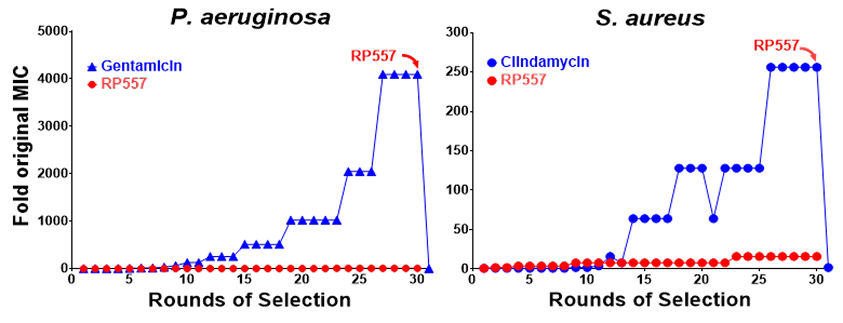
Sustained antimicrobial activity in resistance assays:
Bacterial cultures exposed repeatedly to conventional antibiotics rapidly develop resistance, whereas RP557 maintains potent antimicrobial activity.
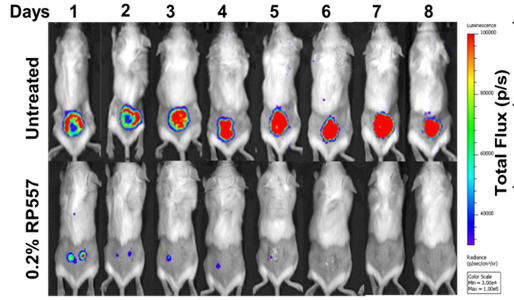
Potent efficacy in infection models
MRSA (resistant staphylococcus) infections are nearly eradicated by a single application of RP557, compared to untreated controls across an 8-day timecourse.
Program 02 — Alleviating Fibrosis
Fibrosis of the skin, lungs, liver, and other organs represents a major unmet medical need, contributing substantially to morbidity, mortality, and healthcare costs worldwide. Despite its broad clinical impact, therapeutic options remain limited. In idiopathic pulmonary fibrosis, for example, only a small number of approved therapies are available, and these primarily slow disease progression while offering limited efficacy and significant tolerability challenges.
Unlike most antifibrotic approaches, which primarily target fibroblasts or individual profibrotic signaling pathways, Riptide’s drug candidate RP30 is designed to modulate fibrosis-associated macrophages (FAMs), a central upstream regulator of the fibrotic response. Activated FAMs orchestrate chronic inflammation and fibrosis by secreting TGF-β and other mediators that drive fibroblast activation and excessive collagen deposition. By restoring these macrophages to a normal physiological state, RP30 interrupts the signaling cascade that sustains fibrosis while simultaneously normalizing downstream fibroblast behavior. This upstream mechanism has the potential to address fibrosis across multiple organs and may extend to inflammatory diseases in which pathogenic macrophages play a central role.
The RP30 program is supported by a broad body of preclinical evidence generated over several years. Activity has been demonstrated in co-culture systems using macrophages and fibroblasts derived from patients, as well as in multiple in vivo models of fibrosis. Efficacy has been demonstrated across models of scleroderma using subcutaneous, intradermal, and topical administration, and in pulmonary fibrosis using both subcutaneous and intratracheal delivery. The consistency of activity across disease models and delivery routes supports the robustness of the underlying mechanism.
Based on the promising results in the fibrosis program, Riptide is also investigating RP30 treatment for inflammatory conditions where dysregulated macrophages are key drivers of disease progress. Animal models of conditions including rheumatoid arthritis, colitis, and multiple sclerosis, have shown substantial improvement with daily subcutaneous administration of Riptide drug candidates.
Riptide is preparing for first-in-human clinical evaluation of RP30 in patients with systemic sclerosis (scleroderma). The program is supported by a longstanding collaboration with clinicians at University College London, one of Europe’s leading centers for systemic sclerosis research and patient care.
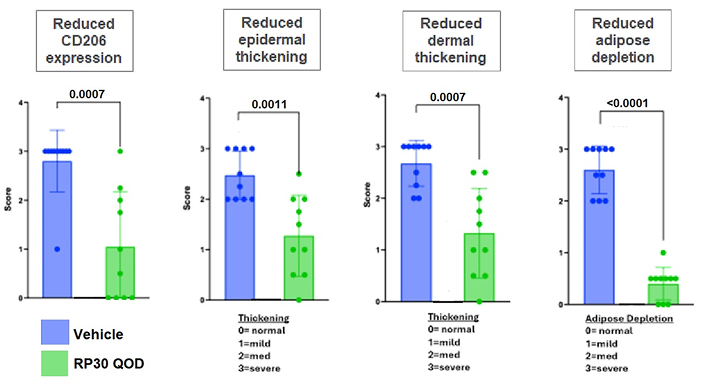
Skin fibrosis
In a mouse model of scleroderma induced by administration of bleomycin, a skin irritant, the skin structure is disrupted by depletion of the normal adipose layer and substantial thickening of both the epidermis and dermis. Topical administration of RP30 every other day substantially alleviates the pathology.
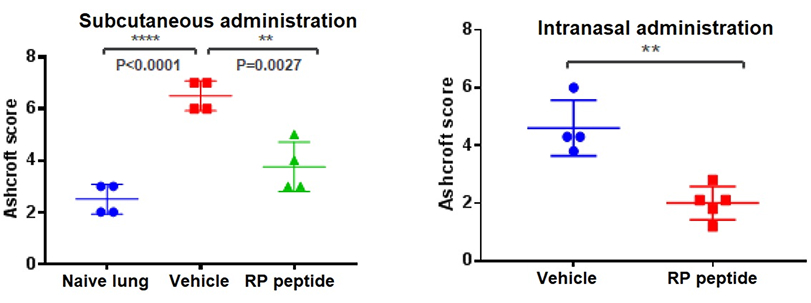
Lung fibrosis
A single bolus of inhaled bleomycin induces severe fibrosis of lung tissue. Administration of RP peptide either subcutaneously or intranasally substantially reduces the fibrosis.
Program 03 — Addressing Cancer
Riptide’s oncology program targets one of the principal drivers of the tumor microenvironment: tumor-associated macrophages (TAMs). In many solid tumors, TAMs actually equal or exceed the number of malignant cells, and promote tumor growth through immune suppression, angiogenesis, tissue remodeling, and metastatic progression. Modulating these pathogenic macrophages represents a promising strategy for restoring anti-tumor immunity.
While macrophage-directed therapies have attracted considerable interest, clinical approaches targeting receptors such as CSF1R and the TREM family have demonstrated the challenges of selectively targeting pathogenic macrophages while sparing normal immune function. Riptide identified CD206 as a more selective therapeutic target because it is highly expressed on immunosuppressive TAMs while showing limited expression on healthy macrophage populations.
RP832c selectively depletes CD206-positive tumor-
associated macrophages — disrupting the
immunosuppressive tumor microenvironment and enhancing checkpoint inhibitor efficacy.
Riptide’s lead oncology candidate, RP832c, selectively depletes CD206-positive tumor-associated macrophages, thereby disrupting the immunosuppressive tumor microenvironment. Reduction of these macrophages consistently leads to inhibition of tumor growth and prolonged survival across multiple tumor models. RP832c has demonstrated activity in preclinical models of triple-negative breast, pancreatic, colon, and prostate cancer.
Particularly encouraging results have been observed in combination with immune checkpoint inhibitors, where depletion of CD206-positive macrophages substantially enhances anti-tumor efficacy compared with checkpoint inhibition alone.
These findings have been independently reproduced by prominent academic collaborators and support continued development of Riptide’s macrophage-targeting platform for oncology.
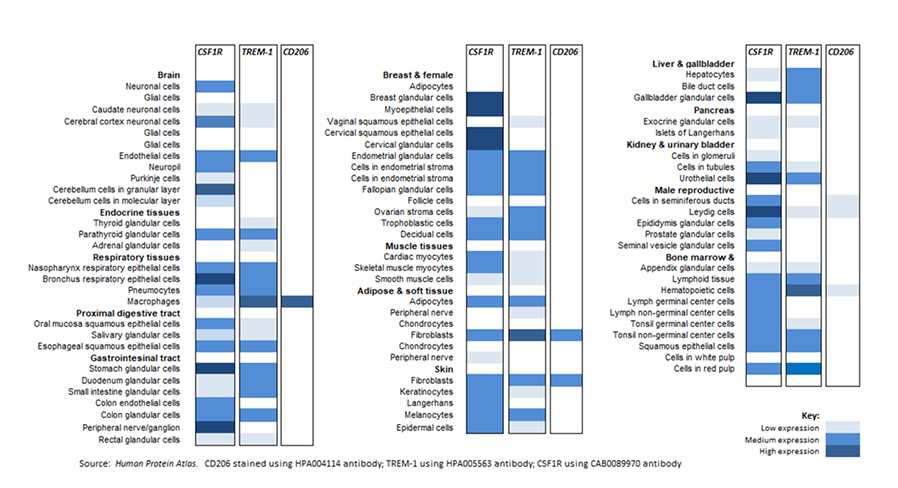
CD206: an ideal therapeutic target
Markers such as CSF1R and TREM1 are expressed on macrophages, but also on many other cell types. By contrast, CD206 is specific to macrophages — an ideal therapeutic target.
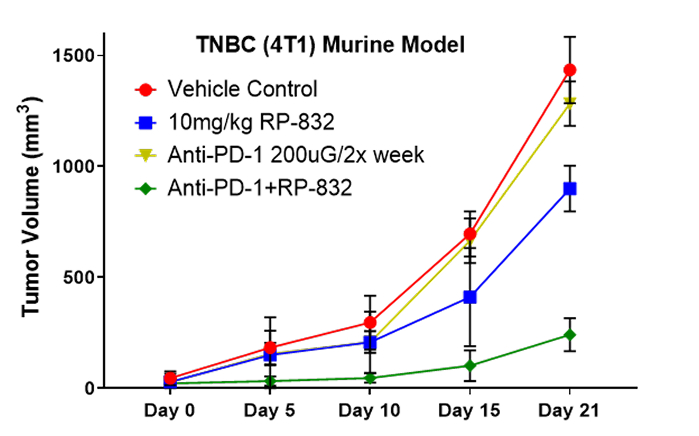
Efficacy in multiple in vivo models
One example: in a murine model of triple-negative breast cancer, drug candidate RP832c retards tumor growth substantially as a monotherapy, and strongly complements checkpoint inhibitor in combination therapy.
03 — Our Team
04 — News & Updates
Riptide’s programs are supported by a growing body of peer-reviewed publications and independent academic validation. Riptide has won substantial support through competitive grants from multiple National Institutes of Health (NCI, NIDDK, NEI, NIAMD), the US Department of the Army, Scleroderma Research UK, and private foundations.
News
March 2, 2026
STANFORD, CA. – A collaborative study by US and Brazil scientists has demonstrated potent activity by Riptide’s RP557 among fungal pathogens designated as high priority by the World Health Organization. Writing in Microbiology, a team led by Dr. David Stevens of Stanford University and Dr. Melissa Xavier of the Mycology Laboratory, Federal University of Rio […]
News
November 26, 2025
ATLANTA, GA. – A team from Emory University’s School of Medicine has established striking efficacy of Riptide Bioscience proprietary peptide, RP832c, in both in vitro and in vivo models of cutaneous T-cell lymphoma. Writing in the Journal of Investigative Dermatology, a team led by Dr. Neda Nikbakht, MD/PhD, reported that in experiments conducted at Emory […]
News
June 10, 2025
BIRMINGHAM, AL. – Researchers at the University of Alabama Medical Center have shown that radiolabeled versions of Riptide immune-modulating peptides can quantify immune responses in diabetes and cancer, potentially helping to drive treatment decisions. Obesity is a chronic inflammatory condition associated with diabetes, cancer, and cardiovascular disease. Over two-thirds of US adults are estimated to […]

CEO
Mr. Garvin, a seasoned CEO and technology investor, has a BA and JD from Harvard University, and did PhD study at Oxford University as a Rhodes Scholar. He has been Chairman, CEO, or controlling shareholder at a number of tech and biotech companies during a 40-year career. Mr. Garvin served as an officer and member of the Board of Directors at the Boston Consulting Group, a leading strategy consulting organization, and was one of the original principals of the Beta Group, a seed capital firm which has incubated several successful medical technology companies. Subsequently Mr. Garvin has served as Chairman or represented controlling interests in companies of up to $350 million in revenues, including TVC Communications, Riviera Trading, EK Holdings and Basic Industries. He is currently a Director of Tosk, Inc. (cancer chemotherapies) and Senior Advisor to SanBio (stem cell therapies).

EVP — Operations
Dr. Lopez is an executive with both hands-on and management expertise in preclinical development, focusing particularly on execution of a wide variety of in vitro and in vivo assays. Dr. Lopez managed laboratories at Xoma, Glycomed, and ultimately Parke-Davis/Pfizer as Director of its Phenotyping Core. He went on to found MuriGenics, a large Contract Research Organization, servicing publicly-held and privately-held pharmaceutical companies worldwide. Dr. Lopez is also an Associate Professor at the Division of Medicine, University College London.

Senior Vice President, Translational Sciences
Translational development executive with 25+ years driving programs from discovery through IND, clinical development, and regulatory approval. Known for shaping development strategy, integrating cross‑functional scientific disciplines, and delivering registration‑ready data packages. Career includes leadership roles at Life Edit Therapeutics (ElevateBio), Avalanche/Adverum (acquired by Eli Lilly), Affymax, and Pharmacyclics (AbbVie), complemented by a consulting practice supporting translational drug development, and regulatory strategy across gene therapy, gene editing, regenerative medicine, ophthalmology, pain, oncology, hematology, arthritis, inflammation, infection and drug delivery. Author of 70+ peer‑reviewed publications and inventor on 10 patents.

Principal Scientist
Dr. Jaynes is a leading biochemist specializing in peptide design, and has served as Chief Scientific Officer at two previous companies. As documented in >120 peer-reviewed publications and >60 patents, the Jaynes Lab was first in the world to demonstrate antiprotozoal, plant disease resistance, and anticancer activity for designed lytic peptides both in vitro and in vivo. In agriculture, Dr. Jaynes’ antimicrobial peptides have been licensed by US Sugar / Tropicana for use in citrus crop protection.

Principal Scientist
Dr. Clemens is a biologist and pharmacologist with 35 years’ experience in drug development, including the first identification of antagonists useful for controlling estrogen-dependent cancers. Dr. Clemens has led research teams at companies including Parke-Davis, Scios, and Metabolex, including the team that prepared data for the IND and ultimate approval of a recombinant form of human natriuretic peptide for congestive heart failure.

Principal Scientist
Dr. Yates, Professor of Oncology, Pathology and Urology at Johns Hopkins University, has administered numerous grant awards from the National Cancer Institute and the Congressionally Directed Medical Research Program at the Department of Defense, and is a frequent invited speaker at national and international conferences focusing on prostate and breast cancer. Dr. Yates’ research focuses on how the tumor microenvironment influences epigenetic regulators, which can cause tumor cells to undergo epithelial to mesenchymal transition (EMT), and promote metastasis.

Board of Directors
Dr. Leonard Post has more than 30 years of experience with all stages of drug development, from early discovery through FDA approval. Previously he served as Senior Vice President of Research and Development at Onyx Pharmaceuticals from 2000 to 2006. In this role, he was responsible for the co-development of Nexavar through to FDA approval for renal cancer. Onyx was sold to Amgen for $10 billion. Subsequently he served as Chief Scientific Officer and Co-Founder of LEAD Therapeutics (sold to BioMarin for $100M), and remained at BioMarin as Chief Scientific Officer.

Board of Advisors
Dr. Frank McCormick is among the world’s top cancer researchers, and received the first Stephenson Global Prize for his groundbreaking cancer discoveries. Dr. McCormick’s pioneering work uncovered how mutations in the KRAS gene, present in more than 90% of pancreatic ductal adenocarcinomas (PDAC), disrupt the body’s natural ability to regulate cell growth. His discoveries have been foundational to the development of therapies targeting KRAS, a goal once thought unattainable.

Board of Advisors
Dame Carol Black is a world-renowned expert in rheumatology, who served as Medical Director of the Royal Free Hospital at University College London, where she established Europe’s largest center for both scleroderma research and treatment. Later she served as President of the Royal College of Physicians, and served as the UK government’s National Director for Health and Work. She is co-president of the UK government organization focusing on the consequences of musculoskeletal disorders, and led the government’s Independent Review of Drugs.
Riptide Bioscience welcomes inquiries from potential partners, licensees, and investors interested in our development programs and proprietary drug candidates. To explore collaboration or investment opportunities, please contact us at info@riptidebio.com.

Founding Advisor · In Memoriam
Prior to his untimely passing, Dr. Kennedy was a founding advisor and shareholder in Riptide Bioscience, and we strive to maintain the scientific rigor and higher objectives he inspired. Dr. Kennedy was a noted neurobiology research scientist prior to chairing Stanford University’s Department of Biology and founding its Program in Human Biology. He went on to serve as the US FDA Commissioner, later returning to Stanford as provost and ultimately University President. Subsequently he served as editor-in-chief of Science.